
“Tales are the father of history”
“Tales are the father of history”
Magic,
Mystery,
Battles
A fearless king with a secret weakness
BOOKS
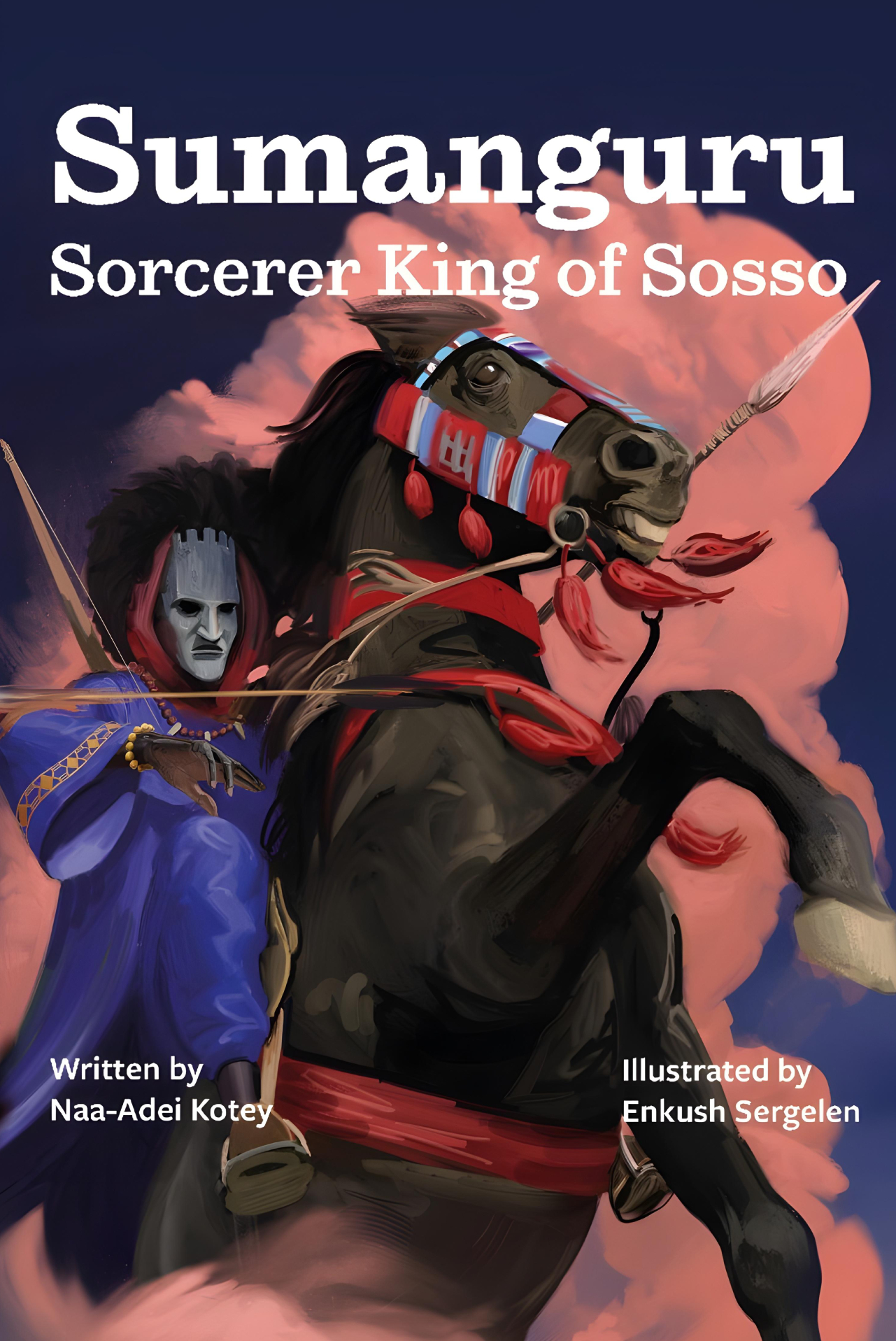
An epic tale of magic, war, and rising against tyranny. Sumanguru Kanté is no ordinary king, he’s a ruthless warrior, a powerful sorcerer, and the feared ruler of the Sosso Empire.
This enthralling account from the 13th century is vividly told through the voices of griots, the legendary chroniclers of West African history and culture. It will transport young readers back to the past to learn about the extraordinary exploits of these real-life historical characters.
About Àróbá
In the Yoruba language, the proverb “Bí ọmọdé kò bá bá ìtàn, a ba Àrọ́bá, Àrọ́bá ni baba ìtàn” translates as “If a child is not able to witness history, the child will hear tales of history, tales are the father of history”. In other words, Àrọ́bá is the foundation, or the root, of the tales that form history (ìtàn).
All over the world, people have their storytelling traditions where they recount various tales about the past involving valiant warriors, great kings, majestic feats, and even just everyday life. These stories, some of which are based on events that actually happened, help to preserve their culture and history. Àróbá, following in this tradition, is once again sharing the enthralling stories from Africa’s past generations using oral and written history sources.
A R T I C L E
Who were the griots?
In West Africa, griots were praise singers for rulers and mighty warriors. The griots shared stories about brave adventures and heroic deeds using poetry, song, and dance. But the griots didn't only perform stories about the good times; they also shared stories about the not-so-wonderful things their rulers and warriors did too.
The griots got involved in important political matters. They were aware of all the important secrets and plots taking place in the kingdom. Rulers often asked the griots to advise them on political matters and even to represent them in negotiations.
Griots had another very important role. They were messengers. It was considered dishonourable to harm a griot, so they could pass undisturbed through enemy lines when kingdoms were at war.
Through poetry, music, and dance, griots preserved the history of kingdoms by passing down this information from generation to generation. This tradition still exists, and if you go to some parts of West Africa today, you can hear griots perform. They share not just the history of great leaders and kingdoms, such as Sumanguru and the Sosso Empire, but also the stories and lineages of many local families.
In West Africa, griots were praise singers for rulers and mighty warriors. The griots shared stories about brave adventures and heroic deeds using poetry, song, and dance.
But the griots didn’t only perform stories about the good times; they also shared stories about the not-so-wonderful things their rulers and warriors did too.
The griots got involved in important political matters. They were aware of all the important secrets and plots taking place in the kingdom. Rulers often asked the griots to advise them on political matters and even to represent them in negotiations.
Griots had another very important role. They were messengers. It was considered dishonourable to harm a griot, so they could pass undisturbed through enemy lines when kingdoms were at war.
Through poetry, music, and dance, griots preserved the history of kingdoms by passing down this information from generation to generation. This tradition still exists, and if you go to some parts of West Africa today, you can hear griots perform. They share not just the history of great leaders and kingdoms, such as Sumanguru and the Sosso Empire, but also the stories and lineages of many local families.
A R T I C L E
Who were the griots?
Who were the griots?
In West Africa, griots were praise singers for rulers and mighty warriors. The griots shared stories about brave adventures and heroic deeds using poetry, song, and dance.
But the griots didn’t only perform stories about the good times; they also shared stories about the not-so-wonderful things their rulers and warriors did too.
The griots got involved in important political matters. They were aware of all the important secrets and plots taking place in the kingdom. Rulers often asked the griots to advise them on political matters and even to represent them in negotiations.
Griots had another very important role. They were messengers. It was considered dishonourable to harm a griot, so they could pass undisturbed through enemy lines when kingdoms were at war.
Through poetry, music, and dance, griots preserved the history of kingdoms by passing down this information from generation to generation. This tradition still exists, and if you go to some parts of West Africa today, you can hear griots perform. They share not just the history of great leaders and kingdoms, such as Sumanguru and the Sosso Empire, but also the stories and lineages of many local families.